A Kids’ Room That Grows With Your Child

A Kids’ Room That Grows With Your Child
A child’s room is more than just a place to sleep. It’s where they play, learn, dream, and grow. But kids change quickly, and their needs evolve just as fast. That’s why it pays to think long-term when designing their space—so the room can adapt as they do. Here’s how to create a kids’ room that grows with your child.
Start With Flexible Foundations
When your child is small, the focus is often on comfort and safety. But even from the start, you can make choices that will work for years to come.
- Choose neutral colors for walls and larger furniture pieces. This makes it easy to refresh the look with new bedding, art, or accessories as your child’s interests change.
- Invest in adjustable furniture—like a crib that converts into a toddler bed or a desk that can be raised as your child grows.
- Think in zones: one for play, one for rest, and one for storage. These areas can shift in purpose as your child’s needs evolve.
A flexible foundation means you won’t have to start from scratch every time your child enters a new stage.
Smart Storage for Everyday Life
Kids’ rooms have to hold a lot—clothes, toys, books, art supplies, and more. Good storage is key to keeping the space functional and calm.
- Use modular shelving or bins that can be rearranged or stacked as needed.
- Include open storage at kid height, so your child can easily find and put away their things.
- As they get older, swap some open bins for closed cabinets or drawers to create a tidier, more mature look.
Evolving storage not only keeps the room organized but also helps your child learn responsibility for their belongings.
Make Room for Play and Learning
In the early years, open floor space is essential for play. But as your child grows, they’ll need a place to draw, build, and eventually do homework.
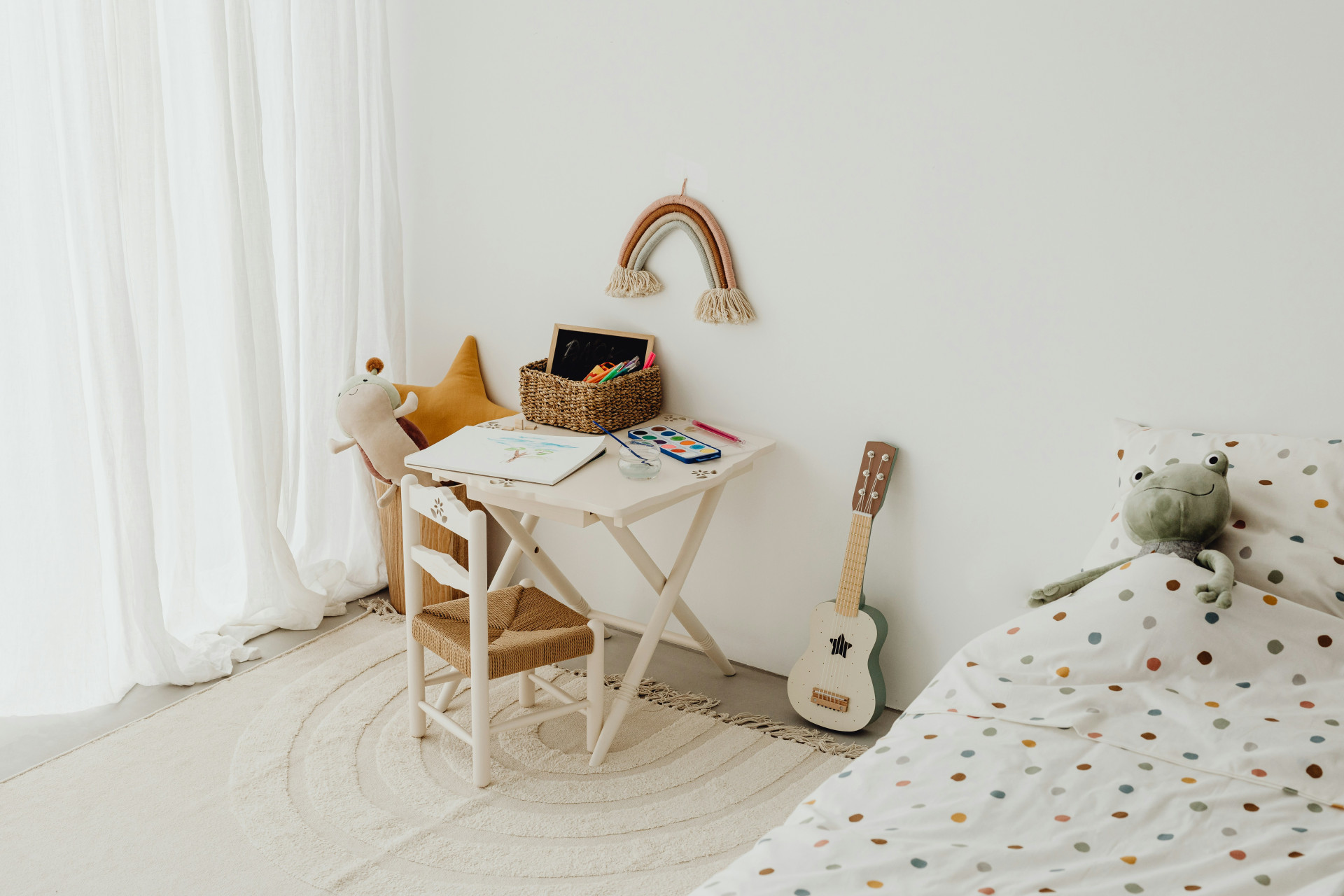
A height-adjustable table can serve as a craft station in preschool and a study desk later on. Pair it with a comfortable, supportive chair and make sure there’s good lighting—both natural light and a quality desk lamp.
When school starts, add shelves for books and supplies to keep the workspace organized. This helps the room transition from a play zone to a place for focus and creativity.
Add Personality—With Flexibility
A child’s room should reflect who they are. Let them help choose colors, posters, and decorations—but guide the process so it’s easy to update later.
Instead of painting an entire wall in a bold color, try removable wall decals or framed prints that can be swapped out as interests change. A few textiles in their favorite color—like bedding, pillows, or curtains—can also make a big impact without locking you into a theme.
This approach keeps the room feeling personal and fresh, no matter your child’s age.
Think Sustainable and Budget-Friendly
A room that grows with your child isn’t just practical—it’s sustainable. Choosing quality pieces that last saves both money and resources.
Look for solid wood furniture or items made from recycled materials that can be repainted or repaired over time. Many families also find great options at thrift stores or online marketplaces, giving pre-loved furniture a second life.
As your child gets older, involve them in the process—maybe repaint a dresser together or pick new wall colors. It’s a fun way to teach creativity and ownership.
A Space That Evolves With Life
A child’s room should adapt to every stage—from toddler playtime to teenage privacy. By planning with flexibility, choosing timeless pieces, and letting your child have a say along the way, you can create a space that feels right for years to come.
It’s not about perfection—it’s about building a room where your child feels comfortable, inspired, and at home, no matter how much they grow.